
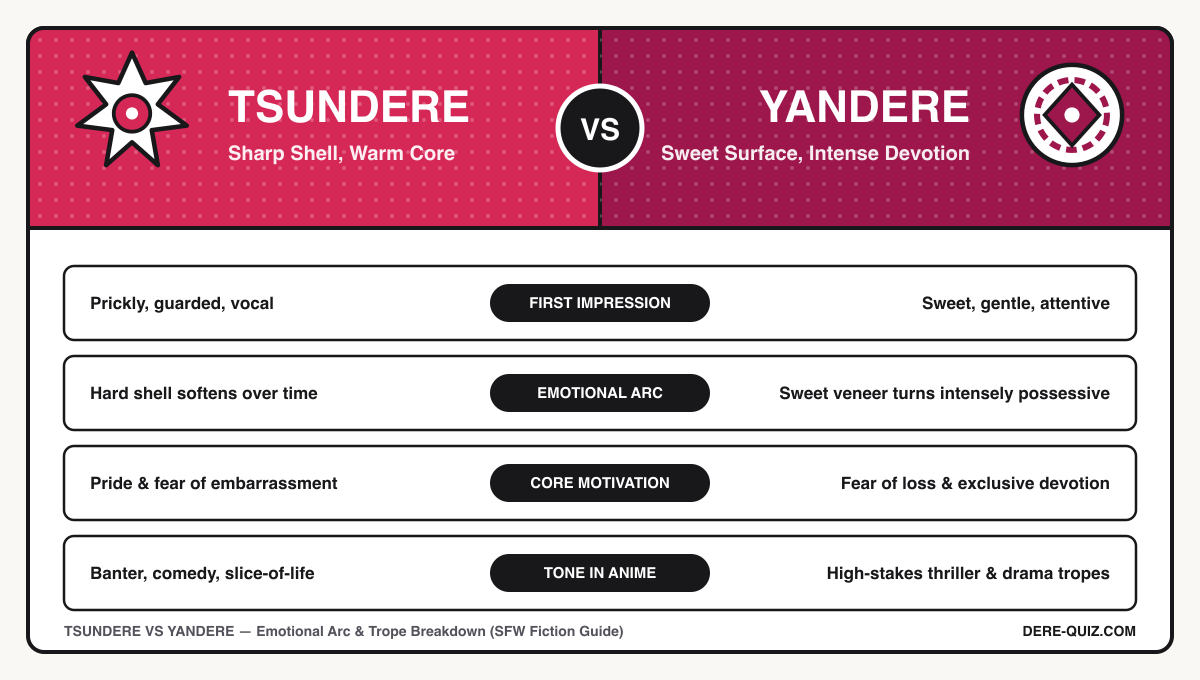
Side-by-Side Comparison Table
| Dimension | Tsundere | Yandere |
|---|---|---|
| Japanese Etymology | Tsuntsun (prickly/aloof) + Deredere (warm) | Yanderu (emotionally strained) + Deredere (warm) |
| First Impression | Guarded, sarcastic, quick to argue or deflect | Polite, sweet, attentive, and remarkably prepared |
| Emotional Arc | Hard outer shell softens steadily as trust builds | Gentle exterior escalates into intense possessiveness in fiction |
| Core Driver | Pride, embarrassment, and fear of seeming too eager | Fear of loss, abandonment, and exclusive focus |
| Typical Anime Genres | Slice-of-life, school comedy, adventure banter | Psychological mystery, suspense thriller, dark satire |
| How Care Shows Up (SFW) | Practical favors disguised as "no big deal" | Encyclopedic detail memory and meticulous backup plans |
How Each Archetype Reacts in Everyday Scenarios
Scenario 1: A friend forgets their lunch before a long club meeting
Tsundere Response
Hands over half their homemade bento while insisting they accidentally packed too much and hate wasting food.
Yandere Response
Already packed an exact duplicate of their friend's favorite sandwich, napkin, and preferred drink just in case.
Scenario 2: Someone new joins the close-knit friend group
Tsundere Response
Acts skeptical and brisk for a week until the newcomer proves they can handle banter, then quietly accepts them.
Yandere Response
Greets the newcomer with a bright smile while closely tracking whether old traditions or group plans are shifting.
Scenario 3: Receiving unexpected sincere praise in public
Tsundere Response
Blushes immediately, mutters "Don't make a fuss over something basic," and changes the subject.
Yandere Response
Beams warmly, treasures the exact wording, and remembers that compliment verbatim months later.
Scenario 4: Planning a high-stakes group project
Tsundere Response
Grumbles about teammates missing details, yet stays up late polishing the slides so the group wins.
Yandere Response
Builds a color-coded master tracker covering every milestone, backup file, and teammate preference.
The Direction-of-Arc Rule
If you ever want to tell a tsundere apart from a yandere in five seconds flat, ignore hair color or voice tone and look only at the direction of the arc:
- Outside-In Softening (Tsundere): The friction happens upfront. You hear the complaints, eye-rolls, or defensive denial first; the genuine loyalty and kindness reveal themselves as trust deepens.
- Surface-to-Intensity Contrast (Yandere): The warmth happens upfront. In anime scripts, the character begins as the sweetest, most attentive figure in the room, and the dramatic tension arises from how overwhelmingly protective or possessive they become when they fear losing that bond.
Storytelling Purpose vs. Real-World Personality
Understanding why writers reach for each trope clarifies why fans love discussing both. Tsundere characters create relatable comedic friction—almost everyone knows what it feels like to get embarrassed when receiving a sincere compliment. Yandere characters, by contrast, serve as heightened dramatic engines in mystery and thriller anime, exploring themes of fixation and tonal contrast that are intentionally stylized for fiction rather than meant as real-life templates.
Want to explore another famous pair that sits on the quieter side of the chart? Read our Kuudere vs Dandere guide, or jump back to the Dere Type Quiz to see your own 10-type percentages.
Common Questions: Tsundere vs Yandere
Why do people confuse tsundere and yandere?
They are the two most famous dere words in English anime culture and both feature strong emotional contrast, even though their character arcs move in opposite directions.
Which archetype is more common in everyday anime comedy?
Tsundere appears widely across comedy, action, and slice-of-life series. Yandere is most often used in suspense, mystery, or exaggerated parody stories.
Can a single character have both tsundere and yandere traits?
Rarely in strict archetype terms, because their default openings conflict (prickly vs. sweet). However, someone taking our quiz can score moderate points in both if they combine proud banter with intense detail-focused loyalty.
Are yandere traits on Dere Quiz kept SFW?
Yes. Both our quiz scenarios and our guides treat yandere strictly as a fictional storytelling trope and map benign SFW habits—like meticulous preparation and all-in devotion—without glorifying harm.
Find out which side you lean toward
Take our 16-scenario Dere Type Quiz to compare your Tsundere and Yandere percentages directly.